Blog
How long does the average UK property take to sell in 2026?
18 min read
Rightmove, Zoopla and conveyancing timelines explained — from finding a buyer to exchange and completion, plus what sellers can do to move faster.
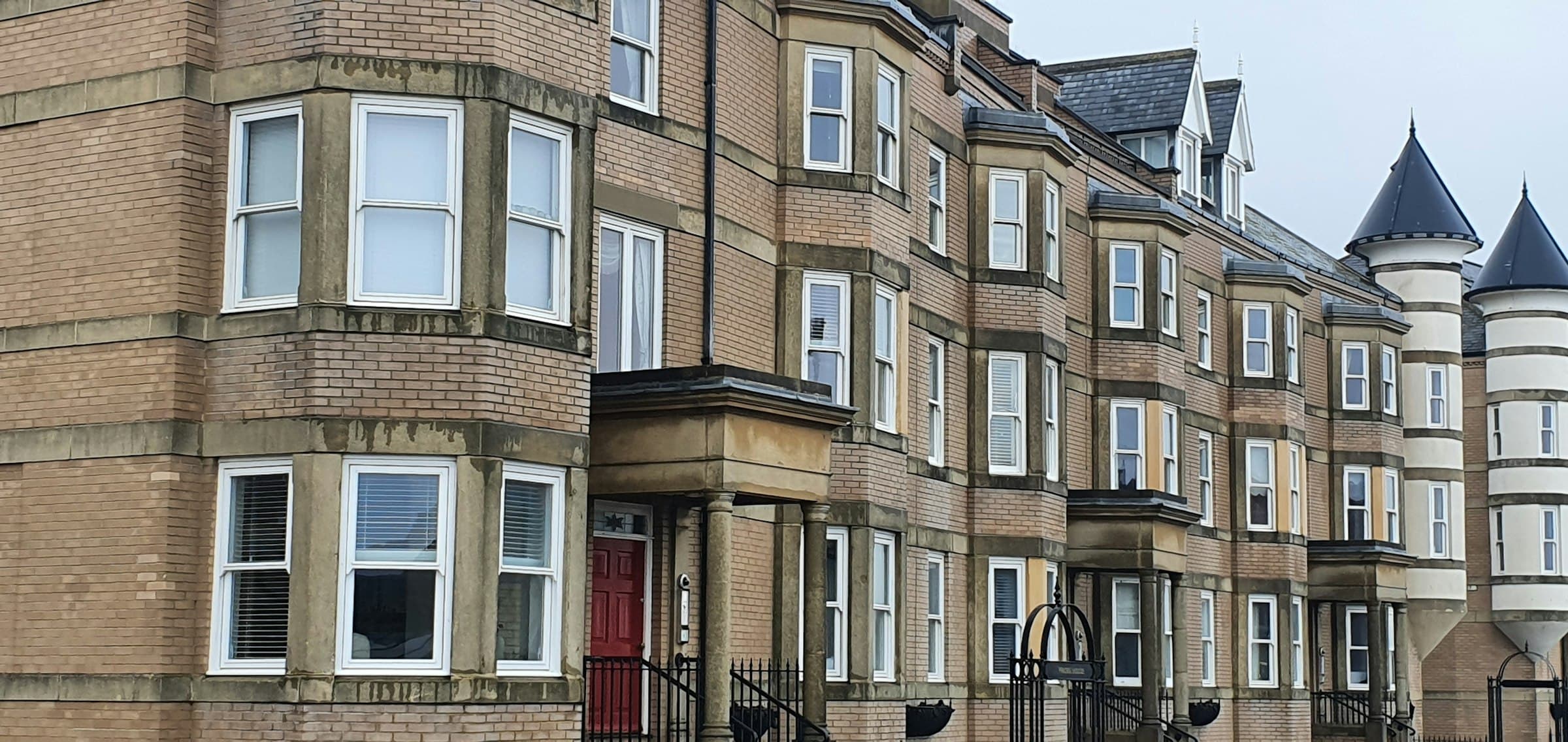
If you put your home on the market today, when should you realistically expect to be handing over the keys?
The answer depends on what you mean by “sell”.
Finding a buyer can take weeks. Getting from an accepted offer to exchange can take months. Completion normally comes after that.
In the latest 2026 data, Rightmove reports that it took an average of 63 days to secure a buyer in July 2026. Zoopla, using a different dataset and methodology, reports a national average of 42 days to find a buyer in July.
But finding a buyer is only the first part.
Rightmove's latest August 2026 buying timeline says the overall home-buying process is taking around seven months, with roughly five months between a sale being agreed and completion.
So if you are asking “how long does it take to sell a house in 2026?”, a sensible answer is:
Allow roughly six to eight months from putting a property on the market to completing the sale, although a straightforward chain-free transaction can be significantly faster and a complicated sale can take much longer.
Here is where all that time actually goes, why exchange can take so long and what you can do to speed things up.
The market statistics in this article largely cover Great Britain. The explanation of exchange of contracts refers primarily to the buying and selling process in England and Wales, as the Scottish system works differently.
How long does it take to sell a house in 2026?
A useful way to understand the timeline is to divide the sale into three stages:
| Stage | Rough 2026 expectation |
|---|---|
| Listing to finding a buyer | Around 6-9 weeks |
| Offer accepted to exchange | Often 12-20+ weeks |
| Exchange to completion | Often around 1-2 weeks |
| Total selling journey | Roughly 6-8 months |
These are guides rather than deadlines.
Some properties receive an offer during their first weekend on the market.
Some sales exchange in six or eight weeks.
Others spend several months finding a buyer and another six months getting through conveyancing.
That is why asking only for the “average time to sell” can be misleading.
How long does it take to find a buyer in 2026?
Rightmove's latest House Price Index shows that the national average time to secure a buyer was 63 days in July 2026. Earlier in the year it was considerably longer:
- January: 81 days
- February: 73 days
- March: 66 days
- April: 62 days
- May: 60 days
- June: 62 days
- July: 63 days
Zoopla reports a shorter national average of 42 days in July 2026. The difference does not mean one figure is necessarily wrong. Property portals measure slightly different things using different datasets.
The important point for sellers is that finding a buyer is currently measured in weeks, while completing the transaction is often measured in months.
Why do different websites give different selling times?
Because there is no single official definition of “time to sell”.
One dataset might measure:
Property first advertised → sale agreed
Another might measure:
Offer accepted → completion
And another might attempt to measure:
Property first listed → keys handed over
Those are completely different periods.
A property advertised on 1 September might receive an offer on 20 October but not complete until March.
Was that a seven-week sale or a six-month sale?
Technically, you could find statistics describing it as either.
For someone actually planning to move home, the most useful measurement is usually listing to completion.
How long does it take to exchange contracts?
This is one of the most important questions in the whole property transaction.
In 2026, a sensible expectation is that getting from an accepted offer to exchange could take around 12 to 20 weeks, with straightforward transactions potentially exchanging sooner and complicated transactions taking substantially longer.
Propertymark reported in April 2026 that transaction times had increased significantly, with buyers and sellers facing waits of up to 17 weeks to exchange.
Rightmove's updated August 2026 buying timeline is even more cautious, allowing around five months for conveyancing and exchange of contracts in the current market, while stressing that individual transactions can be shorter or longer.
As a rough guide:
| Transaction | Possible offer-to-exchange time |
|---|---|
| Very straightforward and chain-free | 6-10 weeks |
| Straightforward transaction | 10-14 weeks |
| Typical transaction | 12-20 weeks |
| Complicated or long chain | 20+ weeks |
These are illustrative ranges rather than guaranteed timescales.
What needs to happen before contracts can be exchanged?
A buyer and their conveyancer normally need to be satisfied with the legal and financial position before exchange.
That can mean waiting for:
- formal mortgage offer
- property searches
- survey results
- title investigation
- seller property forms
- planning information
- building regulation documentation
- answers to enquiries
- leasehold information
- management company information
- proof of funds
- deposit
- the rest of the property chain
And that is where the time goes.
It is rarely one single five-month task.
It is lots of individual tasks, dependencies and questions.
Why does exchange take so long?
Imagine this fairly ordinary sequence.
The buyer's solicitor reviews the property.
They notice an extension.
They ask for the building regulation completion certificate.
The seller cannot find it.
The seller contacts their previous solicitor.
Nothing is found.
They investigate whether the council has a copy.
The information comes back.
It is sent to the solicitor.
The buyer's solicitor reviews it.
Another question arises.
A relatively small issue has now generated several additional weeks.
Multiply that across a transaction involving title, searches, mortgage, survey, planning, leasehold information and a property chain and it becomes easier to understand why exchange can take months.
Is exchanging contracts legally binding?
Yes.
In England and Wales, exchange of contracts is the critical point at which the buyer and seller become legally committed to the transaction.
Rightmove's current guidance confirms that an accepted offer is not legally binding and that the transaction becomes legally binding when contracts are exchanged.
A simple way to remember the process is:
Offer accepted = agreement in principle
Exchange = legal commitment
Completion = ownership changes and keys are handed over
That is also why the period before exchange can feel so stressful.
Both buyer and seller may have emotionally committed to the move while still being legally able to withdraw.
Can contracts be exchanged in two weeks?
It is possible.
It is also unusual for a normal residential transaction.
It becomes more realistic where:
- there is no property chain
- the buyer is paying cash
- title is straightforward
- the seller's paperwork is already prepared
- searches are available quickly
- no major survey problems arise
- there are few enquiries
- everyone responds immediately
There is no legal requirement saying a property must spend three or four months in conveyancing.
The challenge is getting every piece of information and every party ready at the same time.
How long is it between exchange and completion?
Rightmove's August 2026 timeline suggests that around one to two weeks after exchange is a typical guide.
But there is no compulsory period.
Buyer and seller can agree something different.
You can:
- exchange and complete on the same day
- complete a few days later
- complete a week later
- agree several weeks between exchange and completion
The completion date is normally agreed before contracts are exchanged.
Can you exchange and complete on the same day?
Yes.
This is known as simultaneous exchange and completion.
It can make sense in certain transactions, particularly where there is no complicated chain.
The disadvantage is uncertainty.
Until exchange actually occurs, the transaction is still not legally binding, which can make booking removals and making firm moving arrangements more difficult.
How long does it take from an accepted offer to completion?
Rightmove reported in June 2026 that its March data showed an average of 167 days, or around five and a half months, from sale agreed to completion.
Its newer August buying guide summarises the current position as around five months from sold to completion.
That means sellers need to be careful when planning around an accepted offer.
Accepting an offer in September does not necessarily mean you will be moving in October or November.
Completion could realistically fall into the new year.
So how long should I allow to sell my house?
Consider three possible examples.
A very fast sale
Find buyer: 2 weeks
Offer to exchange: 7 weeks
Exchange to completion: 1 week
Total: around 10 weeks
Definitely possible.
Not something you should automatically expect.
A reasonably typical 2026 sale
Find buyer: 7 weeks
Offer to exchange: 17 weeks
Exchange to completion: 2 weeks
Total: around 26 weeks, or six months
A slower transaction
Find buyer: 12 weeks
Offer to exchange: 24 weeks
Exchange to completion: 2 weeks
Total: around nine months
And if the first buyer withdraws, the clock can effectively restart.
Where you live makes a huge difference
There is no single UK housing market.
Zoopla's latest August 2026 analysis found an extraordinary variation in the amount of time homes take to find buyers.
The fastest local authority was Falkirk at just 11 days.
At the other end, Melton averaged 76 days.
Westminster and Teignbridge were both around 63 days.
So a national average can hide enormous local differences.
Your postcode may be considerably more useful than the national figure.
Why are Scottish homes often finding buyers faster?
Zoopla's ten fastest-moving markets in its August 2026 analysis were all in Scotland.
But direct comparisons need care because the Scottish buying system works differently.
Homes are commonly marketed with a Home Report containing information, including a survey, available much earlier.
That means buyers often have more information before making an offer.
There is a useful lesson there for England and Wales too:
providing more property information earlier can reduce uncertainty later.
Is London taking longer to sell?
Generally, yes.
Rightmove's latest figures show London taking 73 days to secure a buyer in July 2026, compared with 63 days nationally.
But London itself varies enormously.
Zoopla found Waltham Forest averaging around 33 days while Westminster was around 63 days in July 2026.
Again, local market conditions matter.
Does asking price affect how quickly a house sells?
Very much.
One of the most important things sellers can control is the price at which the property first enters the market.
Zoopla reported in May 2026 that properties which sold without needing a price reduction took an average of 50 days, compared with 64 days for homes that required a reduction.
Rightmove also explicitly notes that properties priced too high will generally take longer to secure a buyer.
This is why the strategy:
“Let's put it on high and see what happens.”
can be expensive in time.
Isn't it better to start high and reduce later?
Not necessarily.
Imagine your home is realistically likely to sell somewhere around £450,000.
You list it at £500,000.
Buyers searching up to £475,000 may never see it.
Other buyers compare it with better £500,000 homes.
It receives little interest.
Eight weeks later, you reduce it to £475,000.
Then six weeks later to £460,000.
You have eventually reached a realistic price, but the listing has now been sitting on the market for months.
Buyers may start asking:
“Why hasn't it sold?”
Pricing correctly at launch gives you the greatest chance of generating competition while the property is fresh to the market.
How do I know if my asking price is realistic?
Look at completed sales, rather than only other asking prices.
Useful comparisons should ideally be:
- close to your home
- similar property type
- similar size
- similar condition
- recently sold
If three similar homes actually sold for £425,000 to £450,000, that evidence is usually much more useful than discovering another seller is currently asking £500,000.
An asking price tells you what somebody wants.
A sold price tells you what a buyer actually paid.
What if my house hasn't sold after eight weeks?
Eight weeks is now close enough to current market averages that it is worth reviewing what is happening.
Ask four questions.
Am I getting viewings?
If hardly anybody is viewing, the asking price or listing may not be competitive enough.
Am I getting viewings but no offers?
That could indicate a price issue, condition problem or something buyers discover once they visit.
Are comparable homes selling?
Look at what buyers have chosen instead.
What feedback keeps appearing?
One buyer saying the kitchen is dated means very little.
Ten buyers saying the price feels too high relative to similar homes is useful market evidence.
Do not automatically reduce your price because eight weeks have passed.
But don't ignore consistent evidence either.
Which properties sell fastest?
There is no universal property type that always sells fastest.
Speed depends on:
- local demand
- price
- property type
- affordability
- condition
- schools
- transport
- competing stock
- buyer demographics
An affordable three-bedroom house in a popular school area may attract several buyers immediately.
A unique £3 million country property may take months because far fewer people can buy it.
That does not necessarily mean the second property is overpriced.
Its buyer pool is simply smaller.
Does being chain-free speed up a sale?
It can make a considerable difference.
Imagine:
First-time buyer → seller moving into rented accommodation
There is one transaction.
Compare that with:
First-time buyer → House A → House B → House C → House D
Now five households may need to coordinate their legal work, finances and completion date.
Your own transaction can be completely ready while somebody three properties away is still waiting for a mortgage offer.
Removing the chain does not guarantee a fast sale.
But it removes a major source of delay.
Does a cash buyer make a sale faster?
Potentially.
A genuine cash buyer removes the mortgage process.
That means there is no need to wait for:
- mortgage underwriting
- lender valuation
- mortgage offer
- lender's legal requirements
But a cash buyer should still investigate what they are purchasing.
They may still want:
- searches
- survey
- title investigation
- enquiries
Cash buyer does not mean no conveyancing.
It simply removes one potentially significant part of it.
What does “sold subject to contract” mean?
Sold Subject to Contract, usually shortened to SSTC, means that an offer has been accepted but the legal transaction has not completed.
Crucially, in England and Wales, the buyer and seller are generally not legally bound at this point.
Rightmove describes exchange as the point at which the sale becomes legally binding.
That distinction is important because a property can remain SSTC for months.
Can a buyer pull out before exchange?
Generally, yes, in England and Wales.
A buyer might withdraw because:
- survey discovers a problem
- mortgage is refused
- lender values the property lower
- legal problem emerges
- their own sale collapses
- circumstances change
- they simply change their mind
They may lose money already spent, but the purchase itself is generally not binding until contracts are exchanged.
Can a seller pull out before exchange?
Again, generally yes in England and Wales.
This is also why gazumping can occur.
A seller may decide:
- not to move
- to accept another offer
- to renegotiate
- to stay in the property
Once contracts have exchanged, the position changes dramatically.
What is gazumping?
Gazumping happens when a seller has already accepted one buyer's offer but accepts a better offer from somebody else before exchange.
For example:
Buyer A offers £450,000.
The seller accepts.
Buyer A pays for searches and a survey.
Three weeks later:
Buyer B offers £465,000.
The seller accepts Buyer B's offer instead.
Buyer A has been gazumped.
Because the original transaction had not yet exchanged contracts, it was generally not legally binding.
The longer transactions remain in this uncertain pre-exchange period, the greater the opportunity for things to change.
What is gazundering?
Gazundering is effectively the reverse.
It happens when a buyer reduces their offer late in the transaction before exchange.
For example:
Agreed price: £500,000.
Shortly before exchange, the buyer says:
“I'll only proceed at £480,000.”
There may be a legitimate reason, such as a serious survey finding.
Or it may simply be a negotiating tactic.
The seller can accept, reject or negotiate.
Again, this is possible because the transaction has not yet become binding.
Why do property sales fall through?
There are many potential reasons:
- buyer changes their mind
- seller changes their mind
- mortgage refusal
- down valuation
- bad survey
- conveyancing issue
- title problem
- missing documents
- chain collapse
- gazumping
- gazundering
- relationship breakdown
- job loss
- delays becoming unacceptable
The longer the period between offer and exchange, the longer both parties remain exposed to those risks.
That is why speeding up conveyancing is not simply about convenience.
It can also help reduce the opportunity for a sale to collapse.
Why is conveyancing the slowest part?
Because much of the information needed to sell a property has traditionally been collected after the buyer appears.
Think about how strange that is.
You advertise a £500,000 property.
A buyer agrees to buy it.
Only then does the process seriously begin of establishing:
- exactly what land is included
- whether the extension has documentation
- whether there are title problems
- whether rights of way exist
- whether certificates are missing
- what restrictions apply
- what the lease says
That is backwards.
Many of those things could be investigated before the property reaches the market.
What causes the biggest conveyancing delays?
Common causes include:
Missing seller information
Property forms have not been completed or key questions are unanswered.
Planning and building regulation documents
The buyer asks about an extension and the seller cannot produce the paperwork.
Leasehold management packs
Information has to be obtained from a managing agent or freeholder.
Searches
Some search providers and local authorities take longer than others.
Mortgage offers
The buyer may still be waiting for approval.
Title problems
Something needs clarification, amendment or further investigation.
Enquiries
An answer produces another question.
The property chain
Everyone else has to become ready too.
How can I speed up exchange of contracts?
Sellers can do far more before accepting an offer than many realise.
Prepare:
- title information
- property information
- planning permissions
- building regulation certificates
- guarantees
- warranties
- EPC
- FENSA or window certificates
- boiler information
- extension documents
- solar panel paperwork
- leasehold information
If you know something is missing, investigate it before somebody is waiting for you.
Buyers can also help by moving quickly with:
- solicitor instruction
- mortgage application
- proof of funds
- searches
- survey
- deposit preparation
The principle is straightforward:
Don't wait until you want to exchange contracts to start finding the information needed to exchange contracts.
Should I instruct a solicitor before finding a buyer?
It can be a very sensible idea.
Traditionally, many sellers find their buyer first and instruct the solicitor afterwards.
That creates an immediate delay.
Instead, sellers can potentially have:
- identity checks completed
- initial paperwork completed
- title obtained
- seller information prepared
- property documents assembled
before accepting an offer.
Then the legal pack can be prepared much sooner.
Should I get my property documents ready before listing?
Yes.
This may be one of the easiest ways to reduce avoidable conveyancing delays.
Look for:
- planning approvals
- building regulation completion certificates
- extension documentation
- FENSA certificates
- electrical certificates
- boiler information
- warranties
- guarantees
- lease
- service charge information
- solar panel documentation
If you cannot find something now, you have time to investigate.
If you cannot find it three days before everyone wants to exchange, it becomes a crisis.
How do I know what is actually delaying my house sale?
Do not just ask:
“Any update?”
Ask:
“What specifically is preventing us from exchanging contracts?”
You want an answer like:
- Buyer mortgage offer outstanding.
- Two enquiries remain unanswered.
- Waiting for management pack.
- Local authority search outstanding.
- Property at the top of the chain is not ready.
That gives you something useful.
Then ask:
“Who currently owns each outstanding action?”
Now you know whether the delay sits with:
- you
- your solicitor
- buyer
- buyer's solicitor
- lender
- council
- managing agent
- another transaction in the chain
That is much more productive than everybody simply chasing everybody else.
Can a house sale complete in four weeks?
Yes.
But it would be unusually fast.
It becomes more realistic where:
- buyer is chain-free
- seller is chain-free
- cash is available
- title is straightforward
- paperwork is already prepared
- searches return quickly
- survey finds no problem
- enquiries are minimal
The fact that a four-week transaction is possible demonstrates an important point:
months of delay are not inherently required to transfer a property.
Much of the current timescale comes from coordinating information and multiple parties.
Can selling a house take a year?
Yes.
It is considerably longer than average, but it happens.
Perhaps:
- the property takes four months to find a buyer
- the buyer withdraws after three months
- it goes back on the market
- another buyer is found
- the second transaction takes five months
Suddenly a year has passed.
This is why sellers should distinguish between:
time spent finding a buyer
and:
time spent trying to complete after finding one.
They are different problems.
When is the best time to sell?
Spring is traditionally one of the busiest periods, but there is no month that guarantees a fast sale.
Market conditions, mortgage rates, property type, location and price all matter.
In August 2026, for example, Rightmove reported the number of homes for sale was at a 12-year high for this time of year, increasing the competition sellers face.
That makes accurate pricing and preparation particularly important.
There may be plenty of buyers.
But buyers also have plenty of choice.
Does the estate agent affect how quickly I sell?
Yes, particularly during the first part of the process.
A good estate agent can influence:
- pricing
- photographs
- listing quality
- buyer database
- viewing management
- negotiations
- qualification of buyers
- chain progression
Once an offer is accepted, a good agent can also help keep track of the chain.
That is why choosing the agent promising the highest valuation is not necessarily the best decision.
Ask what evidence supports their valuation and how they progress sales after the offer is accepted.
Is the highest offer always the best offer?
No.
Imagine:
Buyer A
£500,000
First-time buyer
Mortgage agreed in principle
Ready immediately
Buyer B
£510,000
Needs to sell their own house
Their house is not yet marketed
Buyer B has offered £10,000 more.
But Buyer A may have a dramatically better chance of completing quickly.
Sellers should consider:
- price
- chain position
- mortgage status
- deposit
- timescale
- motivation
- likelihood of completing
An offer only becomes valuable when the sale completes.
What is the fastest way to sell a house in 2026?
There are really two separate jobs.
Find the buyer quickly
Focus on:
- realistic pricing
- strong presentation
- good photographs
- easy viewings
- sensible estate-agent choice
- responding to market feedback
Get to exchange quickly
Focus on:
- instructing your conveyancer early
- completing property forms
- checking title
- finding planning documentation
- finding building regulation certificates
- preparing leasehold information
- identifying missing documents
- responding quickly to enquiries
Most sellers spend far more time thinking about the first list.
Yet in 2026, the second part can take far longer.
The biggest opportunity is before your home goes on the market
Rightmove's latest data suggests sellers are spending around two months finding a buyer and then around five months getting from the agreed sale towards completion.
That tells us something important.
The biggest opportunity to improve the property transaction may no longer be simply:
“How do we find a buyer faster?”
It may be:
“How do we make the home ready to transact before the buyer arrives?”
Imagine two identical sellers accepting offers today.
Seller A
- Has not instructed a solicitor.
- Cannot find the extension paperwork.
- Has never looked at the title.
- Has not completed the seller information forms.
- Does not know where the window certificates are.
Seller B
- Conveyancer instructed.
- Identity checks complete.
- Title checked.
- Property information prepared.
- Planning records available.
- Building regulation documentation available.
- Guarantees and certificates collected.
Both sellers have found a buyer.
But only one is genuinely ready for the next stage.
Could property sales eventually take weeks rather than months?
For straightforward transactions, there is no obvious reason every property should require five months of post-offer administration.
Some delays are unavoidable.
Mortgage lenders need to assess borrowers.
Buyers need to carry out due diligence.
Searches take time.
Legal problems sometimes need resolving.
But a great deal of transaction time comes from information being requested sequentially after the sale is agreed.
The seller could potentially provide far more of that information upfront.
That is one reason the industry is increasingly focused on material information and upfront property information.
Propertymark has itself supported calls for property checks and property information to be completed before marketing, specifically to identify issues earlier and reduce avoidable delays.
From “for sale” to “ready to sell”
Putting your home on Rightmove does not necessarily mean it is ready to be sold.
It means it is ready to be marketed.
Those are different things.
A genuinely sale-ready home would ideally have much of its property information assembled before the buyer arrives.
That means:
- the property is identified correctly
- title has been checked
- EPC is available
- planning information has been reviewed
- building regulation records are available
- important certificates have been located
- seller information is prepared
- obvious gaps have been identified
Then, when the right buyer makes an offer, the transaction can begin from a much stronger position.
So, how long does the average UK property take to sell in 2026?
The simplest answer is:
Around six to eight months from listing to completion is currently a sensible planning assumption, although the range is enormous.
Latest portal data suggests finding a buyer typically takes around six to nine weeks, depending on the dataset and local market.
Getting from the accepted offer through conveyancing, exchange and completion can then take around five months in the current market.
And if you specifically want to know how long it takes to exchange contracts, allow roughly 12 to 20 weeks as a useful working range, while recognising that simple transactions can be quicker and complicated chains can exceed it considerably. Propertymark's 2026 research has highlighted waits of up to 17 weeks to exchange, while Rightmove's current planning guidance is more cautious still.
The important thing is that the full timescale is not inevitable.
Some of it can be reduced.
And much of the work required to reduce it can happen before you even find your buyer.
Get sale-ready before the clock starts
Tepilo helps you understand the information behind your property before the transaction becomes urgent.
Bring together your property details, title information, EPC, planning history, certificates and other useful records. Identify potential gaps earlier. Know what is likely to be asked before a buyer's conveyancer asks it.
So when your property changes from for sale to sold subject to contract, you are not starting the legal preparation from zero.
You are already several steps ahead.
Find out how sale-ready your home is with Tepilo.
Related guides
16 min read
The house buying and selling process: from offer to completion
The full journey from listing to keys — SSTC, gazumping, surveys, exchange, completion, and the questions buyers and sellers ask at every stage.
12 min read
How can I speed up exchange?
You've agreed a price and everyone wants to move — then the frustrating part starts. Practical steps to remove delays and get to exchange faster.
12 min read
How can we speed the house buying and selling process up?
Practical ways buyers and sellers can move faster — prepare earlier, track what's outstanding, and respond with evidence before delays stack up.
14 min read
Title deeds explained: what they are and how to get a copy
What title deeds, title registers and title plans mean in England and Wales — how to get copies from HM Land Registry, who can access them, and what to keep when selling.